
|
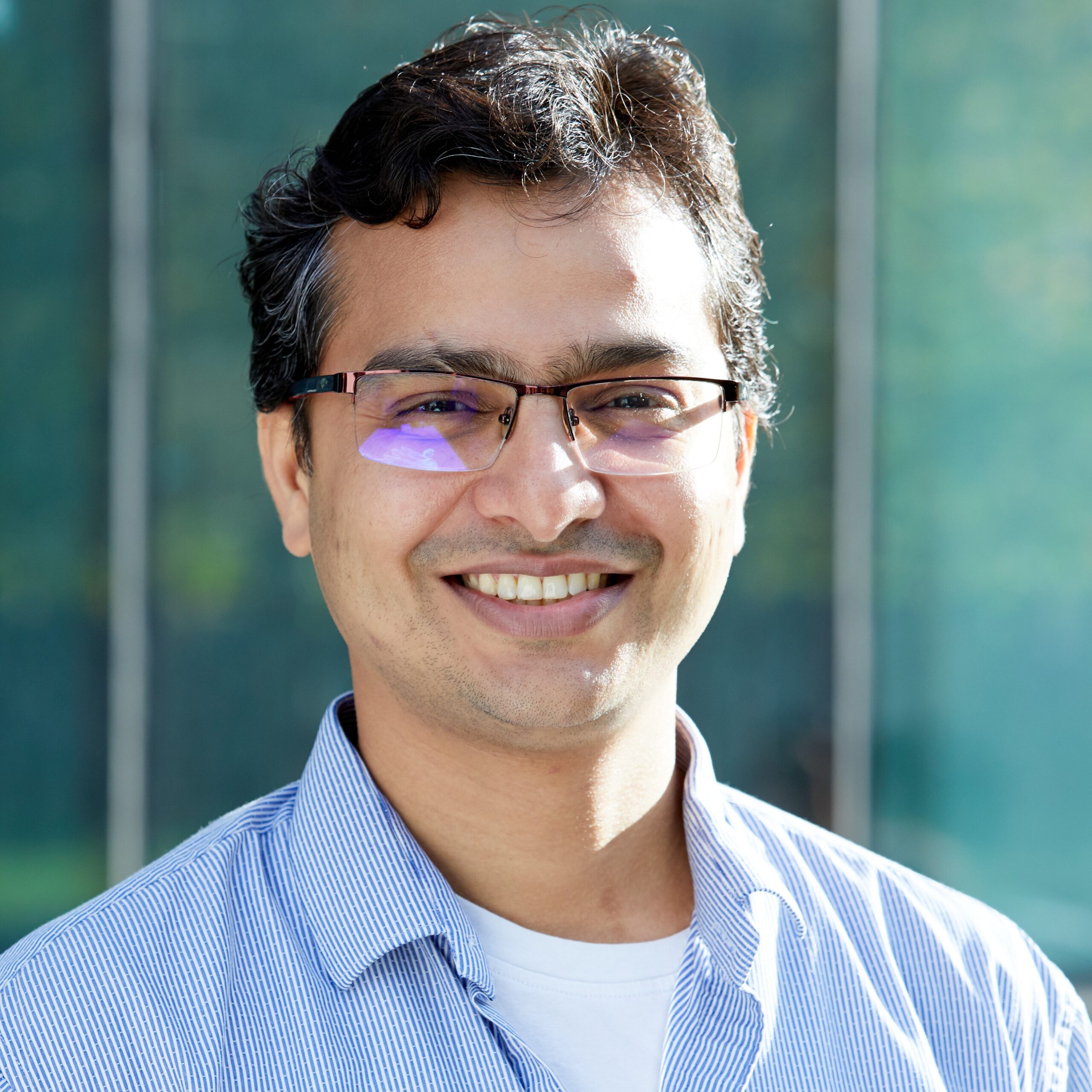
ASSISTANT PROFESSOR NIKHIL GUPTA Faculty Member |
|
| Office: SB-308 Phone: +90 312 290 24 18 E-mail: nikhil.gupta@bilkent.edu.tr |
• Google Scholar profile • LinkedIn profile |
Biography
Dr. Nikhil Gupta is a Principal Investigator in the Department of Molecular Biology and Genetics at Bilkent University, where he leads the Translational Functional Genomics Lab. His research combines CRISPR-based functional genomics, genome editing, single-cell genomics, multi-omics and computational approaches to understand disease biology and identify new therapeutic opportunities, with particular interests in precision oncology, cancer biology and mutation-driven disease vulnerabilities.
Dr. Gupta has almost two decades of research experience across academic and industry settings in North America, Europe and Asia. He completed his PhD at the Jawaharlal Nehru Centre for Advanced Scientific Research in India, followed by postdoctoral research at Purdue University in the United States and at the Centre national de la recherche scientifique (CNRS) UMR7216 Epigenetics and Cell Fate in Paris, France. Before joining Bilkent, he was a Principal Scientist at the Joint AstraZeneca-Cancer Research Horizons Functional Genomics Centre in Cambridge, UK, where he led research and technology development programs in CRISPR technologies, genetic screening and functional genomics for cancer therapeutics. His interests also extend to the translation and commercialization of research discoveries and technologies, particularly at the interface of academic research, biotechnology and therapeutic development.
Research
The Translational Functional Genomics Lab develops experimental and computational approaches to understand how genetic and epigenetic alterations influence disease biology and create therapeutic vulnerabilities. Our research combines CRISPR-based functional genomics, genome editing, single-cell genomics, multi-omics, and computational biology to connect genetic perturbations with molecular states, cellular phenotypes and disease outcomes. By integrating these approaches, we aim to move from genetic associations to experimentally validated mechanisms and potential therapeutic vulnerabilities.
A major focus of the lab is the systematic functional investigation of genes, mutations and genetic interactions involved in disease. Genome-wide and targeted CRISPR approaches are used to identify genes and cellular dependencies that influence disease initiation, progression and treatment response, while single-cell and multi-omics approaches provide detailed views of how perturbations alter cellular states. These discoveries are investigated across complementary in vitro and in vivo models, including patient-derived systems, to establish biological mechanisms and assess their relevance in more complex contexts. Our current research has a particular focus on cancer biology and precision oncology, including gliomas and mutation-driven disease vulnerabilities.
The lab also aims to translate functional genomic discoveries toward therapeutic discovery and development. Genetic perturbation is integrated with pharmacological approaches to identify therapeutic vulnerabilities, mechanisms of drug sensitivity and resistance, and potential combination strategies. Experimental and computational data are brought together to develop increasingly predictive models of disease biology and therapeutic response, creating a foundation for a broader digital cell and functional genomics platform. These approaches are designed to be transferable across disease areas and to support collaborations spanning basic research, clinical research, biotechnology and pharmaceutical drug discovery.
Key Publications
Gupta N, Sayer A, Prater M, Mastrokalou C, Saeed K, Company C, Hart C, Miragaia R, Trehan A, Functional Genomics Centre, McDermott U, Strauss ME, Ross-Thriepland D, Walter D, Kalinka A. Comparative Single-Cell Profiling of CRISPR Knockout and Interference Defines Modality-Specific Strengths in Functional Genomics. bioRxiv. 2026. doi:10.64898/2026.08.26.747303.
Hart C, Devakumar LPS, Saeed K, Spruce A, Mastrokalou C, Lukasiak S, Ross-Thriepland D, Walter D, Gupta N. Scarless conditional sgRNAs via endogenous mascRNA processing enable rapid and temporally controlled genome editing. bioRxiv. 2026. doi:10.64898/2026.08.20.745814.
Lukasiak S, Kalinka A, Gupta N, Papadopoulos A, Saeed K, McDermott U, Hannon GJ, Ross-Thriepland D, Walter D. A benchmark comparison of CRISPRn guide-RNA design algorithms and generation of small single and dual-targeting libraries to boost screening efficiency. BMC Genomics. 2025;26:198.
Gupta N, Yakhou L, Albert JR, Azogui A, Ferry L, Kirsh O, Miura F, Battault S, Yamaguchi K, Laisné M, Domrane C, Bonhomme F, Sarkar A, Delagrange M, Ducos B, Cristofari G, Ito T, Greenberg MVC, Defossez PA. A genome-wide screen reveals new regulators of the 2-cell-like cell state. Nature Structural & Molecular Biology. 2023;30(8):1105-1118.
Yakhou L, Azogui A, Gupta N, Albert JR, Miura F, Ferry L, Yamaguchi K, Battault S, Therizols P, Bonhomme F, Bethuel E, Sarkar A, Greenberg MVC, Arimondo PB, Cristofari G, Kirsh O, Ito T, Defossez PA. A genetic screen identifies BEND3 as a regulator of bivalent gene expression and global DNA methylation. Nucleic Acids Research. 2023;51(19):10292-10308.
Gupta N, Madapura MP, Bhat UA, Rao MRS. Mapping of Post-translational Modifications of Transition Proteins, TP1 and TP2, and Identification of Protein Arginine Methyltransferase 4 and Lysine Methyltransferase 7 as Methyltransferase for TP2. Journal of Biological Chemistry. 2015;290(19):12101-12122.